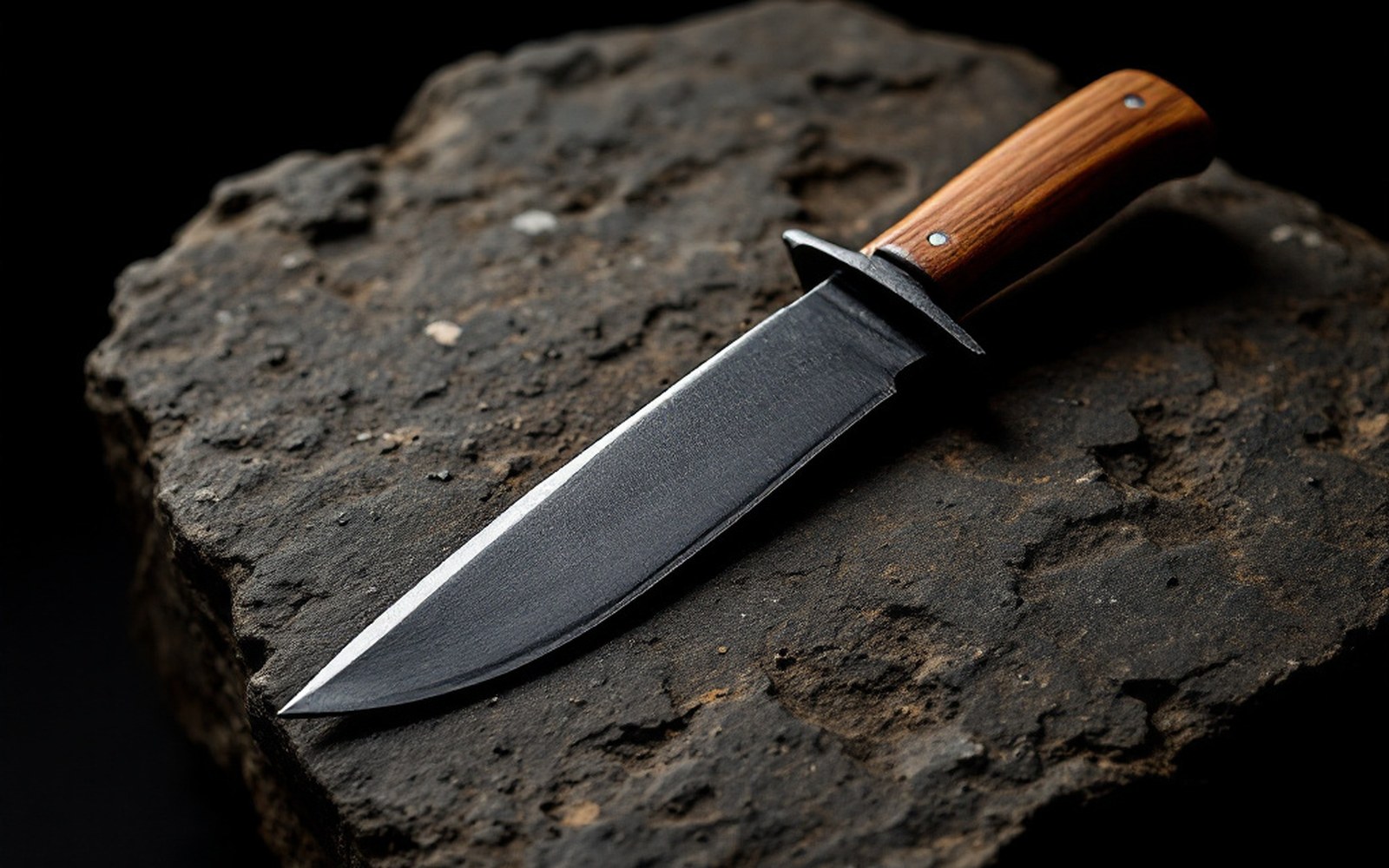
The sica curved away from the hand, the parmula sat small and square against the forearm, and almost nothing about the thraex fighter's equipment made sense unless you already knew who was standing on the other side of the sand. Roman arena pairings were not incidental. They were architectural. The thraex was designed — gradually, institutionally, over the long life of the gladiatorial games — to be matched against the murmillo, and the logic of that pairing shaped every tactical decision a thraex would make from the moment the gates opened.
To understand the thraex as a fighting style rather than a costume is to understand a system built around a specific adversary, in the same way that any technology or product in the enterprise world is eventually revealed to be a response to a competitor rather than a pure expression of first principles. The thraex did not exist abstractly. It existed against the murmillo.
What each piece of equipment decided
The murmillo carried the scutum — the large rectangular shield, the same one the Roman legionary carried into actual warfare. It was heavy, it was tall, it covered almost the entire body from chin to shin, and it was built for absorbing pressure and advancing behind. The murmillo also wore a distinctive crested helmet with a fish-like crest on the top (the name is linked, however loosely, to the Greek word for a saltwater fish), and carried the gladius, a short stabbing sword designed for work at very close quarters.
Against that setup, a large shield would have been redundant. The murmillo's scutum already dictated the terms of engagement at close range: get inside the scutum and the gladius did its work; stay outside it and you couldn't reach the body. A large shield would have committed the thraex to the same distance logic. The parmula — the small square shield that was the thraex's signature piece of kit — was instead a decision to operate at a different range, to stay mobile, to keep the fight from collapsing into a chest-to-chest clinch where the murmillo's mass and coverage would dominate.
The sica enforced the same logic. The curved blade — the sica's defining feature, arcing backward away from the hand — was not designed for a direct thrust. It was designed to come around an obstacle, specifically around a shield edge, specifically around the edge of the scutum. A straight blade driven at the murmillo's left side would meet the face of the shield or the grip holding it. The sica's curve allowed the blade to follow the inside arc of that edge and reach the body behind it without the fighter needing to change their position. It was, in the technical sense, a tool for defeating a specific defence that a straight weapon could not defeat as efficiently.
The equipment pair — thraex vs. murmillo
Lifted from the piece- Parmula (thraex)
- small square shield; prioritises mobility over coverage
- Scutum (murmillo)
- large rectangular shield; full-body coverage, high mass
- Sica (thraex)
- curved blade designed to reach around a shield edge
- Gladius (murmillo)
- short stabbing sword optimised for close-quarter work
- Thraex greaves
- ran higher than standard to compensate for parmula's limited leg coverage
- Thraex helmet
- visored, high curved crest; distinct from murmillo's fish-crested helmet
The Romans were documented observers of gladiatorial equipment and its tactical implications. Ancient sources describe the thraex as a recognisable class with identifiable gear rather than a general category of fighter, which means the pairing with the murmillo had become stable enough by the late Republic and into the Imperial period for the Romans themselves to discuss what each fighter was for.
The pairing as an institutional decision
The editor — the person staging the games, usually a magistrate spending public or private money to secure political goodwill — did not pair fighters randomly. The pairing system was the entertainment logic of the arena, and matching a thraex against a murmillo was the standard, expected, crowd-legible confrontation. Other pairings existed. The retiarius fought the secutor. The hoplomachus appeared alongside the murmillo on occasion. But the thraex-murmillo pairing was one of the most consistently documented in the epigraphy — the inscriptions recording careers, victories and deaths that survive on stone across Italy and the western provinces.
What the crowd read in that pairing was a deliberate asymmetry. The murmillo had mass, coverage and a weapon built for close quarters. The thraex had mobility, a shield small enough to move with, and a weapon built to come around the coverage. Neither fighter dominated by default. The advantage shifted with range: close in, the murmillo's weight and scutum were oppressive; at middle distance, the thraex's sica could be brought to bear. The theatrical logic was that the fight's outcome depended on which fighter could impose their preferred range on the other.
This is not a peripheral detail. In a system where the fight's drama was the product, the equipment pairings were the product's architecture. The editor was selling a legible contest, and legibility required that the audience could read, from a glance at what each fighter was carrying, what the fight would be about. The thraex carried a small shield and a curved sword, and the crowd already knew what problems those tools were built to solve.
Chronology of the pairing
Chronology- Late Republicthraex class becomes recognisable as a stable category in Roman sources
- Imperial periodthraex-murmillo pairing documented as a standard, crowd-legible confrontation
- Epigraphy across Italy and western provincesstone inscriptions record careers and victories within this specific pairing system
Thrace as a reference, not an origin
The name "thraex" — Thracian — points toward the Balkans. The Romans did encounter actual Thracian fighters, and elements of what became the thraex gladiatorial class may have been borrowed from observed Thracian military equipment in the period of the Republic's eastern expansion. The curved blade in particular has parallels in Thracian and Illyrian contexts, and the Romans were systematic in appropriating foreign military styles for the arena's spectacle — Samnite, Gaul, Thracian — partly because the reference read as exotic and partly because distinct styles from distinct peoples produced legible differences.
But by the height of the Imperial games, the thraex was not a Thracian fighter. It was a Roman institutional category, a slot in a system, a defined combination of parmula, sica, visored helmet with a high curved crest, and greaves that ran higher than those of most other types — compensating for the reduced coverage of the small shield by protecting the legs that the parmula left exposed. The equipment logic was coherent and internally consistent: what the parmula did not cover, the greaves did, and what the greaves and parmula together left reachable, the sica's mobility was meant to prevent by keeping the fight at the right range.
Against that setup, a large shield would have been redundant.
The historical Thrace — roughly corresponding to parts of modern Bulgaria, Greece and Turkey — provided the name and perhaps some early material inspiration. What the Romans built on that foundation was a fighting grammar designed entirely around the opponent.
What the pairing tells you
Every piece of the thraex's kit was an answer to a question the murmillo posed. The small shield was an answer to the scutum's bulk. The curved blade was an answer to the scutum's coverage. The high greaves were an answer to the parmula's limited reach. Even the crest of the thraex helmet — typically curved and without the murmillo's fish crest, offering a slightly different visual signature — contributed to the crowd's ability to tell the two fighters apart at a distance, which was itself a functional requirement of the entertainment system.
A fighting style that develops entirely in relation to a specific adversary will show that dependency in every design choice. The thraex, examined piece by piece, is a record of the murmillo's strengths. It exists as the negative space of the opponent's advantages. The sica does not make sense without the scutum. The parmula does not make sense without the fighter who had to stay mobile to survive. The pairing was not just the context for the fight; it was the reason the equipment was what it was.