
The close as architecture
Accounting software is not general-purpose. It looks general — invoices here, payments there, a chart of accounts in the middle — but the real structure is temporal. Every transaction recorded between two dates exists to produce a trial balance that can be frozen, reviewed, and signed off. The month-end close is that freeze. It is the moment when a period's numbers stop being editable and start being evidence. Everything the software does is organized around reaching that moment cleanly.
This shapes the architecture in ways that are not always visible to users. Double-entry bookkeeping has been the mechanical foundation of ledgers since Luca Pacioli codified the practice in 1494, but the periodicity — the idea that accounts are ruled off at regular intervals and a net position struck — is what makes the numbers useful to management, to auditors, and to regulators. A system that cannot enforce period boundaries is not an accounting system; it is a transaction log with arithmetic.
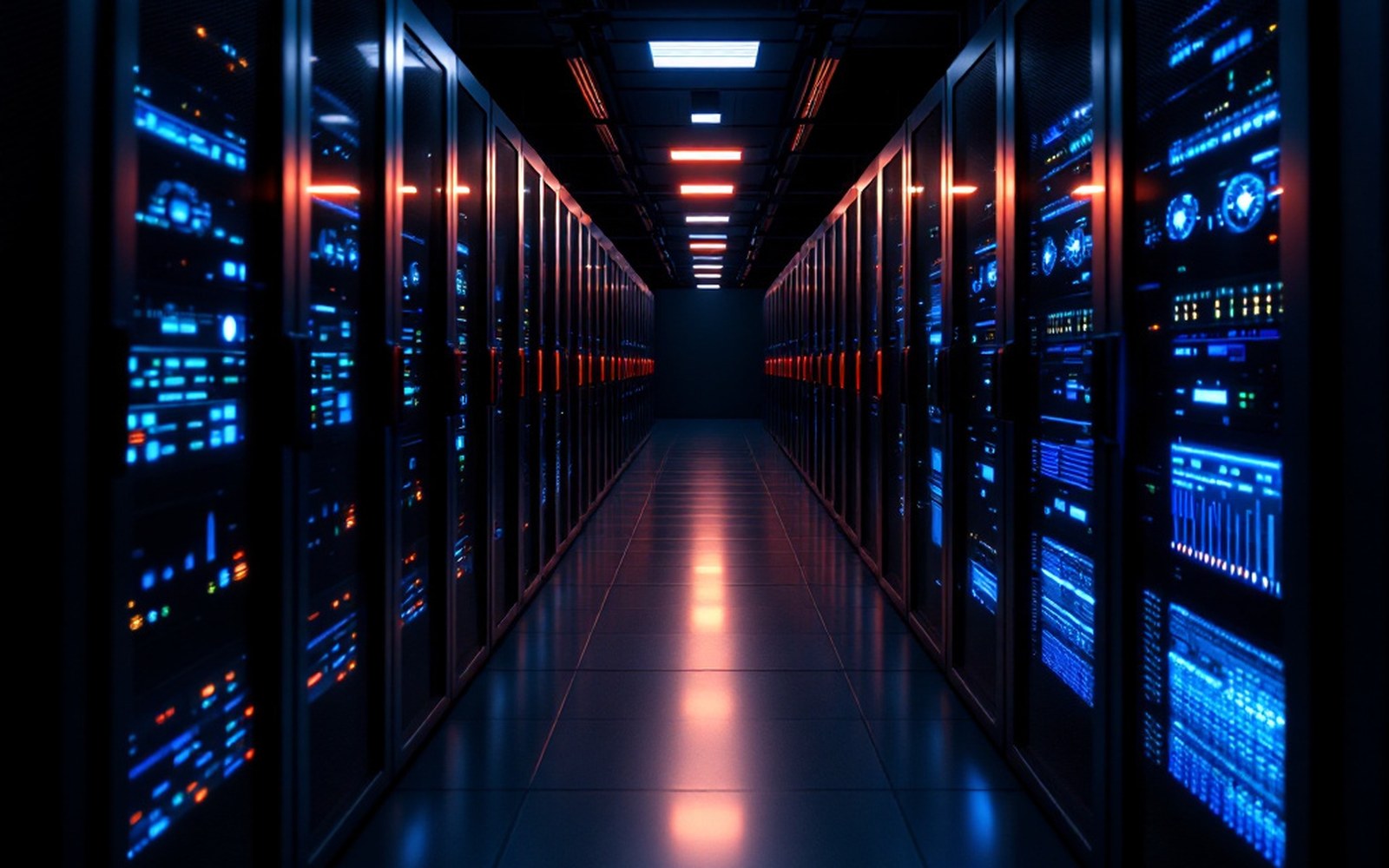
The room the argument was actually about.
Thraex picture desk
The engineering consequence is that period control is one of the most sensitive permissions in any general ledger. Opening a closed period to post a correcting entry, or extending the current period while a subsidiary finishes its reconciliations, are both acts that leave marks. They create opportunities for numbers to change after they have been reviewed, which is exactly the kind of change an auditor wants explained. Systems expose this risk differently — some allow backdating silently, some require an explicit unlock with a reason code — but the architectural decision about how strictly periods are enforced has direct legal consequences. It is not a configuration preference.
How the close became the product
The close did not start as a software concept. It was a calendar ritual enforced by physical ledger books, which were literally ruled off with a horizontal line once a period was complete. No one could easily go back and alter a page without the alteration being visible. The ledger's own materiality was the control.
Chronology
- 1494Luca Pacioli codifies double-entry bookkeeping, including period ruling-off
- 1970Edgar F. Codd's relational model paper published; enables general ledgers on relational databases
- 1960s–70sMainframe GL systems encode period-locking as hard system controls
- 1992SAP R/3 ships, bundling GL with procurement/inventory; close becomes cross-module synchronization point
- 1999Hershey SAP go-live; close-time failures visible within weeks; Salesforce launches SaaS argument
- 2010sSaaS GL migration wave; close-window SLAs become a negotiating point
When general ledger software moved onto mainframes in the 1960s and early 1970s, the physical control disappeared, and the software had to recreate it logically. The systems that came out of that era — from IBM, from Burroughs, later from the early SAP R/2 — encoded period-locking as a hard system control because they were designed for environments where the books had regulatory weight. The close was treated as infrastructure, not a feature.
What changed in the 1980s and 1990s was the market. Edgar F. Codd's relational model, published in 1970, made it possible to build general ledgers on top of general-purpose relational databases rather than custom file structures. That opened the field to a wave of new vendors — Oracle's financials module, SAP's R/3 when it arrived in 1992, PeopleSoft, Great Plains — who were competing on flexibility and configurability as much as on correctness. Flexibility meant that some period controls became softer; a system that could be configured to allow backdating was easier to sell to a CFO who had never missed a close and could not imagine why the constraint mattered.

Before the software, the deadline. The close is older than every system that serves it.
Thraex picture desk
The ERP wave made this worse before it made it better. SAP R/3 and its contemporaries bundled the general ledger with procurement, inventory, and manufacturing, which meant the close was no longer just an accounting event — it was a synchronization point across the whole business. A warehouse that had not confirmed receipts by the close date, a procurement team whose invoices were still in approval workflow: these were now the accounting team's problem. The close became longer, messier, and more political, and the software had to accommodate that by adding sub-ledger reconciliation tools, intercompany elimination routines, and workflow engines that did not exist in the older mainframe products.
What the close reveals
The period close is the moment when deferred problems become visible. A transaction that was posted to the wrong account in week two of the month can sit quietly until the reconciliation in week four forces someone to find where the balance went. This is, in accounting terms, a feature: the close creates a forcing function for accuracy that continuous recording alone does not provide.
What's at stake at close
Lifted from the piece- Period boundaries
- editing a closed period leaves an auditable mark; some systems allow silent backdating
- Sub-ledger reconciliation
- warehouse receipts and invoice approvals must resolve before the GL can close
- Audit trail completeness
- some older systems log final state only, discarding corrections
- SaaS control boundary
- vendor maintenance windows can conflict with close-week operations
But the same property makes the close a reliable stress-test for the software. Hershey's 1999 SAP go-live failed in part because the system could not process the volume of orders and shipments that arrived at Halloween season, and the failure cascaded into fulfilment gaps that showed up immediately in the financial reconciliations — a close-time failure that was visible to the stock market within weeks. The FoxMeyer collapse in the mid-1990s similarly exposed itself at the point where the ERP's inventory records had to be reconciled against physical counts and supplier accounts payable, a process that happens at period end.
The close also exposes the quality of the audit trail. When a period's numbers are wrong, the question is always the same: who posted what, when, and did anyone authorize it? A system with weak journal entry logging makes that question hard to answer. The transition from paper ledgers to electronic ones created the theoretical possibility of perfect traceability — every posting stamped with a user ID, a timestamp, and an originating document — but the implementation has been uneven. Some older systems log the final state of a transaction but discard the intermediate corrections. Some allow direct table edits that bypass the journal entirely, which is why database-level access controls matter as much as application-level ones.
The SaaS migration of the 2010s introduced a new close-time tension. When the general ledger runs in a vendor's data center, the period close happens in a system the customer does not fully control. A scheduled maintenance window that falls on the last working day of the month is not an abstract risk. Marc Benioff's argument when Salesforce launched in 1999 was that renting software and infrastructure together freed customers from operational complexity; what it also did was move certain operational decisions — uptime windows, patch schedules, data residency — to the vendor's side of the contract. For CRM, that trade is often worth making. For a general ledger during close week, the calculus is different, which is why the largest ERP customers have historically negotiated explicit close-window service-level agreements, and why the on-premise general ledger has survived longer than almost any other category of enterprise on-premise software.
The close is not going away. Quarterly reporting requirements, IFRS and US GAAP reconciliation obligations, and the internal discipline of knowing where the money is at a specific date all require it. The software will keep changing around it. The deadline will not.